
 Call Us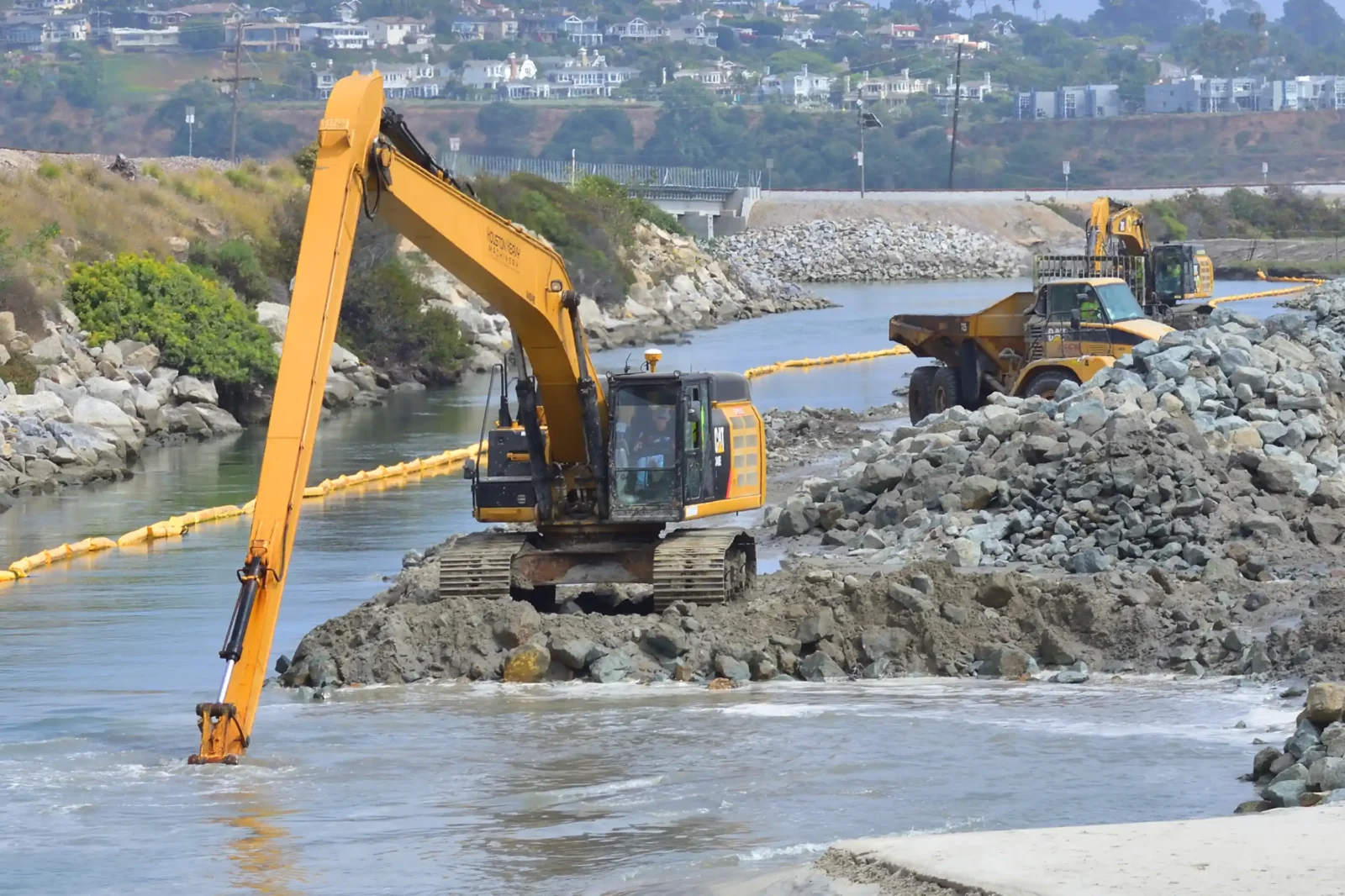
Silt curtains and controlled work zones help keep sediment from moving outside active marine construction areas.
🌊 How Marine Construction Crews Maintain Water Quality During Active Projects
Silt curtains and controlled work zones help keep sediment from moving outside active marine construction areas.
Maintaining water quality is one of the most important parts of marine and heavy civil construction. When crews work in harbors, lagoons, bays, rivers, reservoirs, wetlands, or coastal waterways, even routine activities such as dredging, pile driving, shoreline grading, rock placement, or barge operations can disturb sediment and affect surrounding water conditions if the work is not carefully planned and controlled.
For a contractor like Marathon Construction Corporation, water quality protection is not a separate add-on to the work. It is part of the means and methods. Marathon is a San Diego-based, family-owned marine and general engineering contractor with more than five decades of experience throughout the Western United States. Its work spans marine construction, dredging, heavy civil and earthwork, environmental mitigation, reclamation, and habitat restoration. That combination matters because water quality is both a construction issue and an environmental compliance issue.
The goal is straightforward: complete the work safely and efficiently while keeping sediment, debris, fuels, oils, and other pollutants out of the waterway. The execution requires planning, field experience, the right equipment, and disciplined daily habits from the entire crew.
🏗️ Why Water Quality Control Matters on Marine Projects
Marine construction often occurs in sensitive settings. A project may be next to eelgrass, wetlands, fish habitat, recreational waters, storm drain outfalls, ports, shipyards, marinas, public beaches, or flood control channels. In many cases, the site is also governed by permits from multiple agencies, including local jurisdictions, regional water boards, the California Coastal Commission, the U.S. Army Corps of Engineers, port authorities, or project-specific environmental documents.
That means water quality control is not only about avoiding a visible plume. It is about documenting that the work is being performed within approved limits and that the contractor can respond quickly if conditions change. A good water quality plan anticipates where sediment may move, how tides and currents may affect the work area, where monitoring should occur, and what the crew will do if turbidity rises above allowable thresholds.
Marathon’s long history in waterfront construction, dredging, habitat restoration, and heavy civil work gives the company a practical understanding of how construction sequencing, equipment selection, and environmental controls must work together. A silt curtain alone does not protect a project. The curtain has to be selected, installed, maintained, inspected, and adjusted based on the actual site conditions.
📉 Turbidity: The Primary Water Quality Challenge
Turbidity is the cloudiness of water caused by suspended particles. On a marine construction site, turbidity can increase when sediment is disturbed by dredging, excavation, prop wash, pile driving, rock placement, cofferdam work, dewatering, or shoreline grading. Fine silts and clays are especially difficult because they may remain suspended for long periods and travel outside the work area if they are not contained.
The practical challenge for the construction team is to keep turbidity within the project’s permit requirements while maintaining production. That balance usually starts before work begins. The contractor reviews the location, water depth, bottom material, tides, currents, access constraints, disposal requirements, and environmental sensitivity of the receiving water. Then the team selects the appropriate combination of controls.
🔹 Sequencing the work so high-disturbance activities occur when tides, currents, and weather conditions are favorable.
🔹 Using the right dredging or excavation method for the material and the site, such as clamshell, hydraulic, dragline, or other specialty methods.
🔹 Maintaining a defined work zone with silt curtains, floating booms, barriers, or other containment measures where feasible.
🔹 Monitoring turbidity upstream, downstream, or at other approved compliance points so the crew can see trends and respond before a problem grows.
On successful projects, turbidity control is treated as an active field operation. The superintendent, foreman, operators, laborers, quality control staff, and environmental monitors all need to understand what the permit requires and what field signs indicate that the controls need attention.
🛡️ How Silt Curtains and Containment Barriers Help
Silt curtains are one of the most common tools for controlling sediment in water. A silt curtain hangs from floats at the surface and extends down into the water column. Its purpose is to slow the movement of suspended sediment long enough for particles to settle within the work zone rather than spreading into the surrounding waterway.
However, a silt curtain is not a one-size-fits-all solution. It has to match the site. Water depth, wind, wave action, current speed, vessel traffic, tide range, debris loading, and bottom conditions all affect curtain performance. If a curtain is too shallow, sediment may escape underneath. If it is too deep or improperly weighted, it can drag, billow, or become difficult to maintain. If anchors are poorly set, the entire system can shift out of position.
Experienced marine crews inspect the curtain regularly and make adjustments as work progresses. That may include tightening lines, repairing tears, removing debris, adjusting anchorage, opening and closing access points, or temporarily modifying work methods during weather or tide changes. The best control is the one that fits the actual site and is maintained throughout the shift.
📡 Real-Time Monitoring and Field Response
Water quality monitoring can include turbidity readings, visual observations, photographs, field logs, pH, dissolved oxygen, and other project-specific requirements. Many projects use handheld instruments or deployed sensors at upstream and downstream locations so the team can compare construction-area conditions with background conditions.
The value of monitoring is not just the data; it is the response. If turbidity begins to climb, the crew may slow the production rate, reposition a bucket, adjust a curtain, pause during a tidal swing, change the sequence of work, or add a supplemental control. This is where a contractor’s field experience matters. The project team needs to understand whether the source is dredging, barge movement, runoff from the shoreline, prop wash, a damaged barrier, or unrelated background conditions.
Good monitoring records also protect the owner and contractor. They show that water quality was managed intentionally, that the team followed the approved plan, and that any corrective actions were taken promptly.
🛠️ Clean Equipment and Spill Prevention
Sediment is only one part of water quality management. Marine construction equipment also creates potential risks from fuel, hydraulic oil, grease, concrete washout, paints, solvents, debris, and general construction waste. A small leak on land is bad; a small leak on water can spread quickly.
Professional crews manage this risk through equipment inspections, fueling controls, spill kits, secondary containment, absorbent materials, and housekeeping. Barges and work floats should be treated as active construction platforms, not storage yards. Hoses, fittings, pumps, fuel tanks, generators, and hydraulic equipment should be checked routinely. Waste materials should be secured so they cannot blow, wash, or fall into the water.
Spill response also needs to be practical. Crew members should know where spill kits are located, how to deploy absorbent pads and booms, who to notify, and how to document the incident. On a well-run site, spill prevention is part of the daily safety and production conversation.
🌱 Managing Shoreline Runoff and Upland Work Areas
Water quality problems often start on land. Staging areas, access roads, stockpiles, demolition zones, laydown yards, concrete work, and shoreline grading can all generate sediment or debris that reaches the water during rain, washdown, or high tides. That is why marine projects often require both in-water controls and upland stormwater best management practices.
Common best management practices include gravel bags, fiber rolls, inlet protection, stabilized construction entrances, covered stockpiles, street sweeping, designated fueling areas, concrete washout controls, and daily housekeeping. On projects with dewatering or treated discharge, the water may require filtration, settling, treatment, sampling, or discharge under a specific permit before it can leave the site.
For Marathon, this type of work is familiar because the company’s capabilities include marine construction, heavy civil and earthwork, dredging, and environmental mitigation or habitat restoration. Those scopes often overlap. A wetland restoration project may require earthwork, water control, vegetation protection, haul routes, monitoring, and long-term maintenance. A dredging project may require upland material drying, screening, hauling, and disposal. Water quality planning has to cover the entire operation, not just the in-water equipment.
🚢 Contaminated Sediment and Dredged Material Handling
Some harbors, channels, reservoirs, industrial waterfronts, and shipyard areas contain legacy contamination in the sediment. When that material is disturbed, the project may require special handling, disposal, documentation, and worker protection procedures. This can include pre-dredge sampling, designated dredge cuts, sealed or controlled buckets, lined trucks, dewatering areas, material drying, filtration, water treatment, and approved disposal facilities.
Marathon’s dredging experience includes hydraulic, clamshell, and dragline methods, as well as upland disposal, material drying, and UXO screening when needed. The right method depends on the project’s physical constraints, sediment type, disposal path, environmental requirements, and production goals. The contractor’s job is to match the method to the risk and to keep the work inside the boundaries of the approved plan.
Dredging and material handling methods should be selected around site conditions, disposal requirements, and water quality controls.
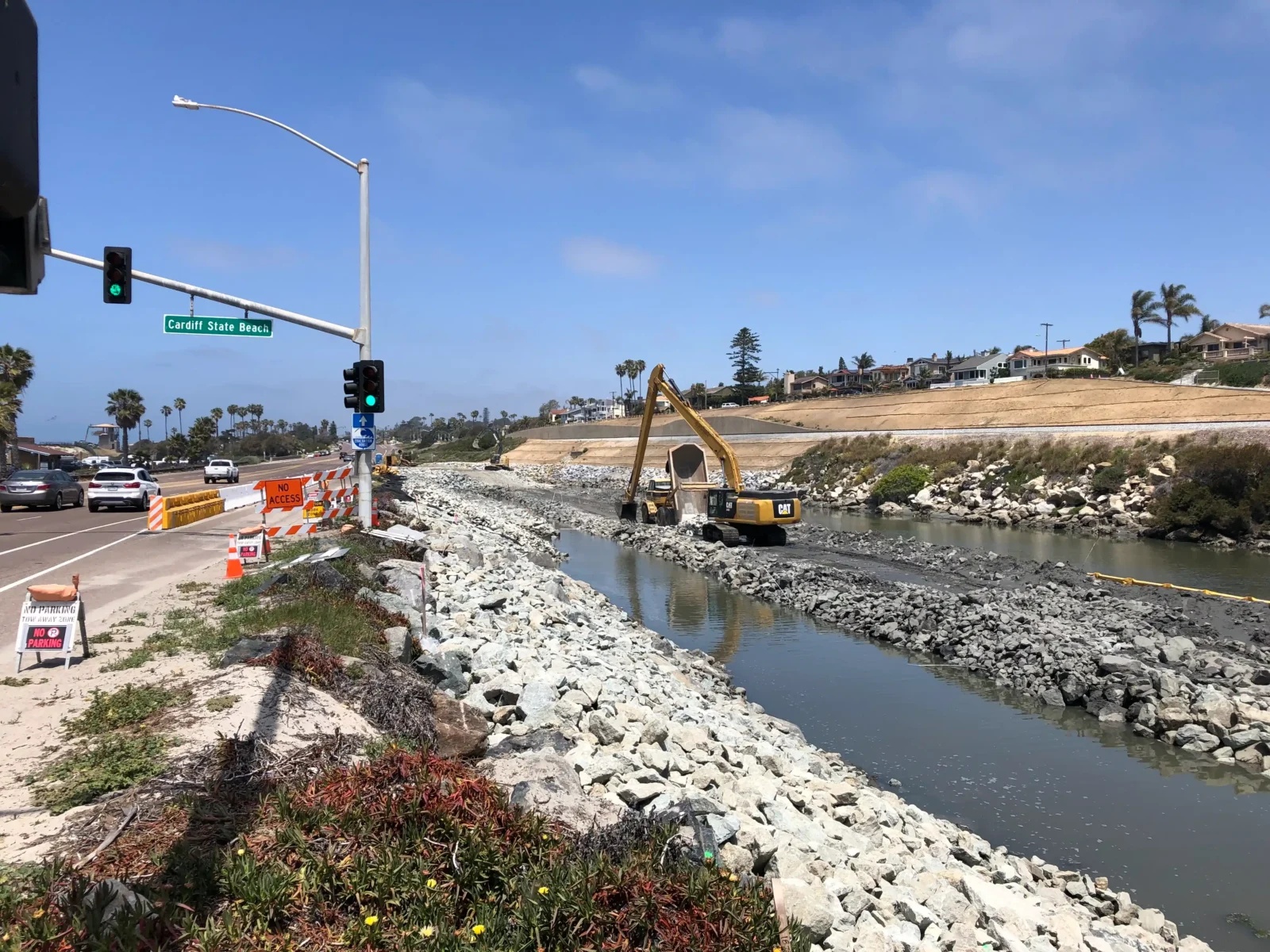
Dredging and material handling methods should be selected around site conditions, disposal requirements, and water quality controls.
⚠️ Common Water Quality Pitfalls
Most water quality problems are avoidable when the team plans ahead and stays disciplined in the field. The common pitfalls are usually simple, but they can create major consequences if they are ignored.
🔸 Underestimating tides and currents: A control that works in the morning may need adjustment when the tide turns or wind increases.
🔸 Treating silt curtains as “set it and forget it” controls: Curtains need regular inspection, maintenance, and adjustment.
🔸 Ignoring upland runoff: Soil, trash, concrete washout, and staging-area debris can create problems even when in-water controls are working.
🔸 Responding too late: Waiting until a visible plume has traveled outside the work area can put the project out of compliance.
🔸 Poor documentation: If inspections, readings, and corrective actions are not recorded, it becomes harder to show that the project was managed properly.
The most effective crews build water quality into the daily plan. They talk about the day’s work, expected tide and weather conditions, environmental restrictions, equipment status, monitoring points, and the specific corrective actions that will be used if conditions change.
⚓ What Owners Should Look for in a Marine Contractor
Owners, agencies, and designers should evaluate more than price when selecting a contractor for work in or near water. The contractor should understand marine construction means and methods, regulatory constraints, environmental controls, and the practical realities of working around tides, weather, access limitations, utilities, public use, navigation, and sensitive habitat.
Marathon’s website describes the company as a full-service marine and general engineering contractor delivering design-bid-build, design-build, and CM/GC projects, with deep experience in marine, environmental, and heavy general engineering work. That breadth is valuable on projects where water quality protection, constructability, safety, schedule, and cost all have to be solved together.
A qualified marine contractor should be able to explain the work plan in plain language: what will be disturbed, how it will be contained, where the material will go, how water quality will be monitored, who will respond if conditions change, and how compliance will be documented.
✅ Conclusion
Water quality protection during marine construction depends on planning, containment, monitoring, clean equipment, disciplined housekeeping, and fast field response. The work is technical, but the core principle is simple: understand how construction activities interact with the waterway and manage those interactions before they become problems.
Marathon Construction Corporation brings decades of marine construction, dredging, heavy civil, and environmental restoration experience to that challenge. From wharves, piers, seawalls, bridges, dredging, flood control, and habitat restoration projects, Marathon’s role is to deliver durable infrastructure while maintaining the quality, safety, and environmental standards that complex waterfront projects demand.
For more information about Marathon Construction Corporation’s marine construction, dredging, heavy civil, and environmental restoration capabilities, contact Marathon at 619-276-4401 or info@marathonsd.com.

 Address
 Email Us
 Contact